
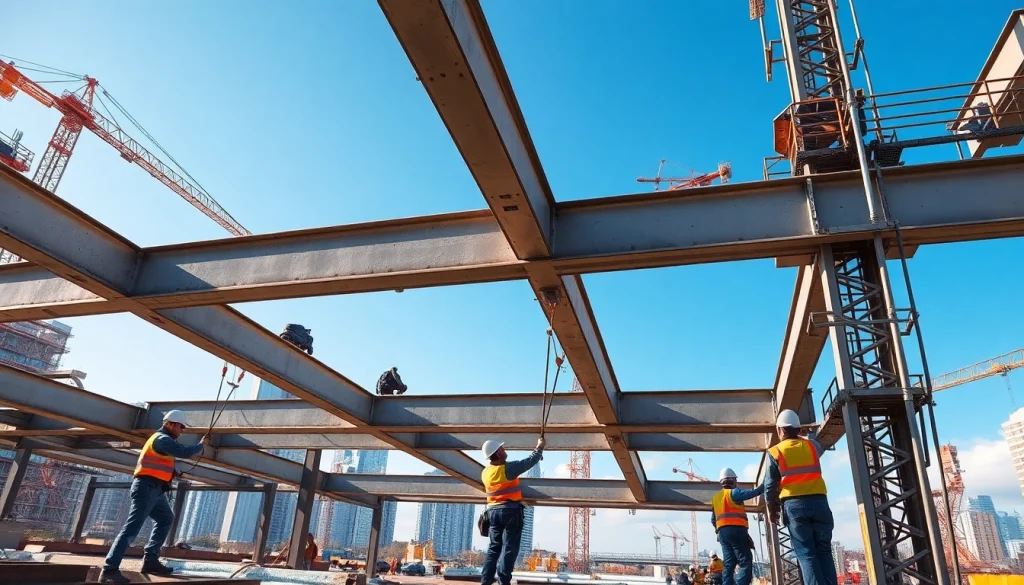
Understanding Structural Steel Installation
Definition and Importance
Structural steel installation is the process of assembling steel framework within a construction site to create buildings, bridges, and various structures. It plays an essential role in modern construction, providing the materials needed for durability and safety. Steel’s high strength-to-weight ratio allows for resilient designs that can withstand environmental factors and heavy loads.
Integrating structural steel installation contributes to the aesthetic and functional aspects of architectural projects, making it a vital component for engineers, architects, and builders worldwide. Its capability to allow large open spaces without interior columns supports modern architectural designs that demand versatility.
Common Applications
Structural steel is widely utilized across numerous sectors, including:
- Commercial Buildings: High-rise hotels, office buildings, and shopping centers often utilize steel in their frameworks.
- Bridges: Steel offers essential tensile strength in bridge construction, enabling precise load distribution.
- Industrial Facilities: Factories and warehouses implement steel for robust structures capable of supporting heavy equipment and inventory.
- Residential Buildings: Contemporary homes increasingly feature steel for frameworks due to its modern appeal.
Key Materials and Tools
Successful structural steel installation relies on specific materials and tools, including:
- Steel Beams and Columns: Common choices include I-beams, H-beams, and angle steel.
- Fasteners: High-strength bolts and welding material are crucial for connecting various components.
- Tools and Equipment: Cranes, hoists, and welding machines are integral for lifting, positioning, and securing steel members.
Planning for Structural Steel Installation
Site Assessment and Preparation
Before commencing any installation, a thorough site assessment is critical. This involves inspecting the geographical features, soil stability, and environmental impact. These factors shape the design, material selection, and safety protocols. Preparation may include clearing the site, ensuring proper drainage, and leveling the ground for seamless assembly.
Design Considerations
Designing for structural steel installation requires input from architects, engineers, and construction teams to ensure compatibility with safety standards. Considerations also include load-bearing requirements, structural integrity, and aesthetic alignment with intended use. High-tech software programs facilitate design simulations to foresee and rectify potential risks.
Legal and Safety Regulations
Maintaining compliance with local and national building codes is non-negotiable. Regulations govern material quality, structural load-bearing capacities, and safety measures. Workers must adhere to guidelines on Personal Protective Equipment (PPE), worksite safety practices, and environmental regulations to mitigate risks and enhance safety.
Methods of Structural Steel Installation
Traditional vs. Modern Techniques
Traditionally, structural steel was installed using manual processes that required significant labor and skill. Modern techniques capitalize on advancements in technology, such as prefabrication and modular construction. These methods promote efficiency by allowing fabrication of steel components off-site, reducing construction time and enhancing quality control.
Using Cranes and Hoisting Equipment
Cranes are essential for lifting and placing heavy steel components at considerable heights. Understanding the operational limits of various cranes, including their load capacities and operational radii, is vital for safe operation. Similarly, hoisting equipment helps in alignment and congregating steel elements during assembly.
Welding and Bolting Methods
Welding and bolting are primary fastening methods in structural steel installation. Welding creates a permanent bond, ensuring optimal strength at joints, which is crucial for load-bearing structures. Conversely, bolting allows for modular adaptability, enabling easier inspections and repairs. The choice between these methods often depends on design requirements, load specifications, and budget considerations.
Best Practices for Efficiency and Safety
Training and Certification
Investing in training programs ensures that all personnel involved in structural steel installation are knowledgeable about safety protocols, equipment handling, and installation techniques. Certification enhances professional credibility and assures compliance with industry standards, which is fundamental for reducing risks and ensuring quality work.
Maintaining Equipment
Regular maintenance of tools and equipment is paramount for efficiency and safety in structural steel installation. Performing routine inspections, repairs, and replacements as needed minimizes the likelihood of accidents and operational delays. Keeping equipment in excellent condition also extends its lifespan and preserves the integrity of the installation process.
Safety Protocols on Site
Establishing stringent safety protocols is fundamental for minimizing workplace hazards. These can include site safety meetings, ensuring all personnel wear appropriate PPE, maintaining clear access routes, and having emergency procedures readily available. Regular safety audits and drills reinforce a culture of safety and preparedness within the construction team.
Evaluating Structural Steel Installation Success
Performance Metrics
To evaluate the success of structural steel installation, relevant performance metrics should be established. Key indicators may include project completion time, adherence to budget, structural integrity assessments, and feedback from stakeholders. Analyzing these factors fosters continuous improvement and helps identify areas necessitating refinements in future projects.
Common Challenges and Solutions
Challenges in structural steel installation may arise from delays, weather conditions, or logistical issues. Developing contingency plans and utilizing effective project management tools can address these challenges. Additionally, fostering clear communication amongst all team members helps mitigate misunderstandings and promotes effective problem-solving.
Future Trends in Structural Steel Installation
The industry is evolving with technological advancements like Building Information Modeling (BIM) and robotics. These innovations optimize design workflows, streamline installations, and increase efficiency. Moreover, growing preferences for sustainable practices mean increased use of recycled steel, significantly reducing environmental impact, making the future of structural steel installation both innovative and sustainable.
Frequently Asked Questions
What is structural steel installation?
Structural steel installation refers to the process of erecting steel frameworks for various structures, ensuring they are durable, safe, and meet design specifications.
What types of structures commonly use structural steel?
Common structures include commercial buildings, bridges, industrial facilities, and residential constructions, utilizing steel for its strength and versatility.
Why is site assessment important before installation?
Site assessment ensures that the construction area is suitable for structural steel, addressing soil stability, drainage, and spatial requirements before installation begins.
What safety measures are necessary during installation?
PPE, clear access routes, regular safety meetings, and emergency procedures are crucial safety measures for preventing accidents during structural steel installation.
What future trends affect structural steel installation?
Emerging trends include advancements in technology like BIM, robotics, and a shift towards sustainable practices, promoting efficiency and reducing environmental impacts.